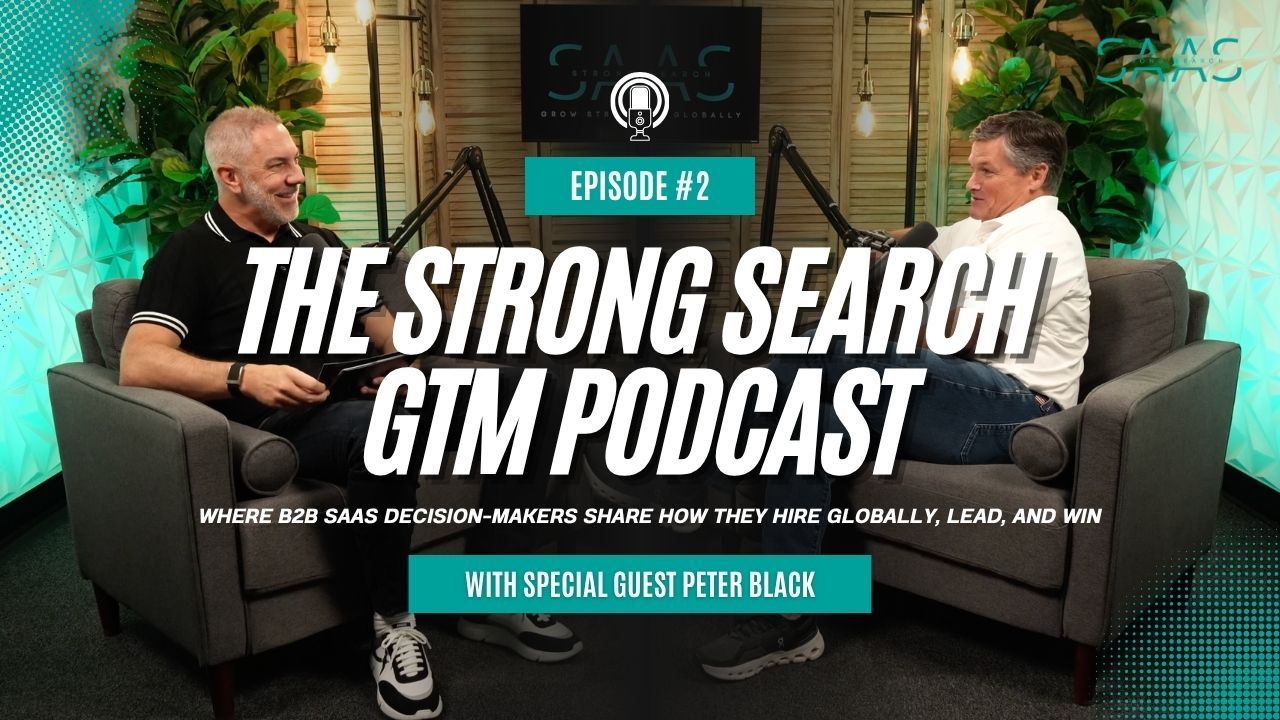
Strong Search is pleased to announce the release of Episode 2 of The Strong Search GTM Podcast – the series dedicated to how the world’s best B2B SaaS leaders build, scale, and sustain high-performing go-to-market teams.
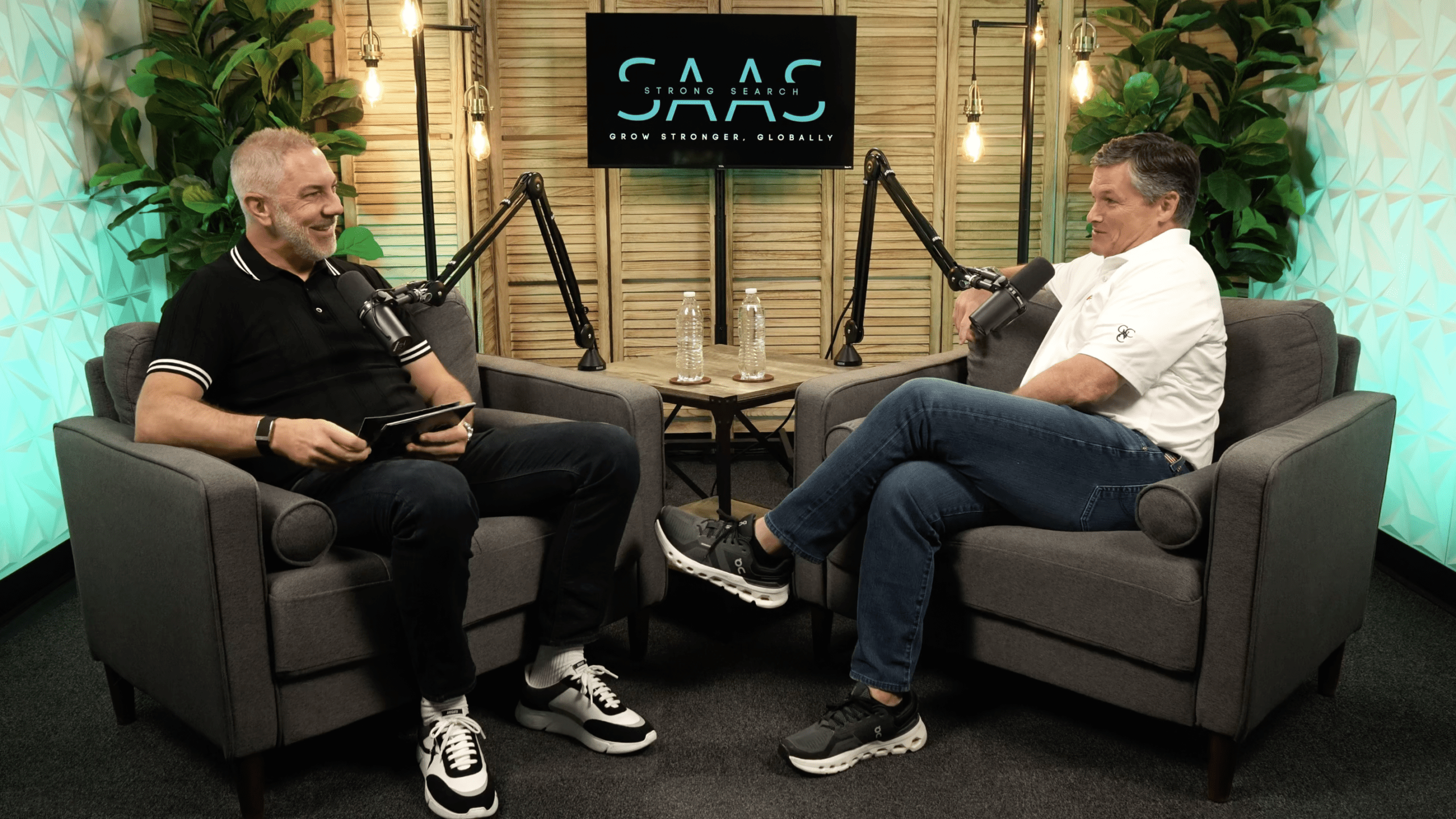
Our second episode features Peter Black, an enterprise software veteran with over 30 years ofexperience across SAP, Ariba, Dun & Bradstreet, Anaplan, and Domo, and today an advisor to PE-backed software companies across the Accel-KKR portfolio. He sits down with Andy Strong, Founder and Managing Director of Strong Search, for a wide-ranging conversation recorded in Salt Lake City.
This is not a polished keynote. It is a candid, experience-led discussion about the realities of go-to-market leadership, what genuinely separates high performers from the rest, and whether the AI wave is truly different to everything that came before it.
Why This Conversation Matters
Why This Conversation Matters
When Strong Search placed a VP of Sales for Alfresco across seven EMEA markets, the challenge was not finding someone who could sell enterprise software. It was finding someone who could sell enterprise software in seven different commercial cultures simultaneously, and build a team capable of doing the same. The profile required was highly specific. The only way to find it was through a search process that went beyond keyword matching and into genuine market expertise.
The rise of AI-native companies adds another layer of complexity to EMEA hiring. These businesses are not just selling differently: they are hiring a fundamentally different profile. The best GTM talent for an AI-native business in EMEA needs technical fluency alongside commercial skill. Buyers are asking harder questions. The sales cycle requires a candidate who can engage at a product and architecture level, not just position ROI. Finding that combination in markets where AI adoption varies significantly by country requires a search partner who is tracking this shift in real time.
Episode 2: Key Themes
Longevity as a Hiring Signal
One ofthe most direct themes ofthe episode is tenure – and what it really tells you about a candidate.
Peter shares that one ofthe first things he looks for when hiring is whether someone can follow themselves and have another strong year, stacked on top ofanother strong year. In enterprise SaaS, where sales cycles are long and technology has real depth, the ability to stay, learn, and compound performance is a competitive differentiator.
The pattern ofjumping roles for a base salary increase is, in his view, a clear warning sign. Not because ambition is a problem, but because it signals an inability or unwillingness to build the internal and external relationships that drive sustained revenue performance.
This insight has direct implications for how SaaS leaders should be screening candidates not just for logos and quota attainment, but for the story those career decisions tell.
The Competitive Mindset: Sport, Business, and What They Share
A recurring thread throughout the conversation is the relationship between competitive sport and go-to-market performance.
Peter’s orientation is clear: he looks for people who have been serious enough about something, whether that is making the Stanford football team or the Stanford marching band, to put in the work to compete. It is not about athleticism. It is about the mindset: the willingness to prepare, to persist, and to compete when the outcome is uncertain.
The parallels to enterprise sales are direct. Deals are lost. Territories stall. Competitors move faster. How a person responds to those moments, whether they find a way or look for excuses, is one ofthe clearest predictors oflong-term performance.
Winning, Losing, and What You Actually Learn
The conversation takes an honest look at how sales teams handle wins and losses and why the learning gap between the two is often larger than it needs to be.
Peter’s view is that losses are scrutinised harder because they hurt, which makes the lessons more visible. But wins contain equally important information, the moments when a deal nearly fell apart, the conversation that changed the arc, the executive relationship that held everything together and most teams simply do not spend the same time examining them.
The story ofa top Anaplan seller who could not explain how she won a major deal, but who kept winning anyway,captures this perfectly. She was, in Peter’s words, unconsciously competent. The skill was real, but it had become habitual rather than deliberate, which made it difficult to coach and even harder to replicate across a team.
The Classic GTM Playbook Has Not Changed – and That Is the Point
When the conversation turns to AI, Peter offers a perspective that will resonate with any experienced SaaS leader.
The hype pattern is familiar. Everyone claims they have AI, just as everyone once claimed they had cloud. The lipstick-on-a-pig problem, where technology is rebranded rather than rebuilt, will repeat itself. And the companies that will win are not the ones with the loudest AI narrative, but the ones that can demonstrate meaningful, measurable, and sustainable value to their customers.
The fundamental GTM motion has not changed: identify the business problem, prove the value, sell consultatively, and have customer success deliver and measure that value so it is visible on a dashboard rather than buried in a pitch deck. Peter points to Rob Bernstein’s work at Coupa, which he describes as “value as a service”, as the clearest example he has seen ofthis done at scale and sustained over time.
For CROs under board pressure to lead with AI messaging, the guidance is equally direct: ride shotgun with the board, make sure the claims are real, and remember that a failed customer does more damage than a slow-to-close prospect.
Executive Sponsorship: How It Is Almost Always Done Wrong
One of the most practically useful sections ofthe episode is Peter’s breakdown ofexecutive sponsorship in enterprise deals.
His observation is simple but important: most reps do not involve an executive until the deal is already slipping. By that point, the executive cannot be positioned effectively – they are entering cold, without context, and without the relationship equity needed to influence the outcome.
The right approach is to start executive engagement early, be deliberate about when and how they are involved, and build a cadence ofauthentic interaction that is not always asking for something. Peter’s two-to-one principle, two touches that give value or express genuine interest before one that asks for anything, is a framework that applies as much to customer relationships as it does to internal sponsorship.
What a Real Search Partnership Looks Like
The final stretch ofthe conversation addresses the difference between a search firm that ships CVs and one that genuinely partners on the build.
Peter’s reflection on the working relationship with Strong Search at Basware is candid and specific. What made it work was not just the quality ofcandidates but the quality of communication, weekly calls, unfiltered feedback, shared accountability, and a genuine understanding ofthe personalities and priorities on the hiring team.
The analogy he draws is a sharp one: the skills that make a great enterprise software seller are the same skills that make a great executive search partner. Understand the problem, earn the right to be in the room, and lead with what the client actually cares about.
People and Process Drive Results
The episode closes with a principle Peter has carried through more than three decades of building go-to-market organisations: PPR. People first, then process, and the results will follow.
Every process in an organisation is either enhancing or inhibiting the ability ofthe people within it to be great. There is no middle ground. Get the right people working in an environment built around them, and the results become almost inevitable.
It is a straightforward idea. It is also, in practice, one ofthe hardest things to get right consistently.
Who This Episode Is For
This episode is essential listening ifyou are:
- A CRO or revenue leader navigating AI transformation in your GTM motion
- A SaaS founder building or scaling an enterprise sales organisation
- A PE or VC operator working with portfolio companies on GTM execution
- A Head of Talent hiring senior go-to-market leaders
- An enterprise AE or sales leader looking for a more honest conversation about what actually drives performance
This is the second in an ongoing series ofconversations with leaders shaping the future of B2B SaaS growth, hiring, and go-to-market execution. Episode 3 is coming soon.
Follow Strong Search on LinkedIn for updates, and subscribe wherever you listen to podcasts.