Your SaaS business is scaling. You’ve smashed through the early milestones, found product-market fit, and your annual recurring revenue (ARR) is climbing past the £10 million mark. But growth is starting to feel… chaotic. Your sales, marketing, and customer success teams are pulling in different directions. Your board is asking for a more predictable revenue strategy. And you’re starting to wonder if your current leadership structure can handle the next phase of growth.
This is the point where many founders and CEOs start to ask themselves: is it time to hire a Chief Revenue Officer (CRO)?
A CRO isn’t just a glorified VP of Sales. To understand the nuances of the VP of Sales role, check out our post on hiring your first VP of Sales. It’s a strategic, C-suite role that owns the entire revenue engine of your business. But hiring a CRO too early can be a costly mistake. So, how do you know when the time is right? In this article, we’ll explore the key inflection points that signal you need a CRO, the difference between a CRO and a VP of Sales, and what to expect from a successful CRO hire.
The Great Debate: VP of Sales vs. Chief Revenue Officer
The most common misconception we see is that a CRO is simply a more senior version of a VP of Sales. This couldn’t be further from the truth. While both roles are critical to revenue growth, they operate at different altitudes and have vastly different responsibilities.
Your VP of Sales is your sales execution leader. They are responsible for managing the sales team, hitting quota, and optimising the sales process. They live and breathe the day-to-day of sales, focusing on deal progression, pipeline management, and sales team performance. They are masters of the sales playbook and are responsible for ensuring the sales team has the tools and support they need to succeed.
Your Chief Revenue Officer, on the other hand, is the architect of your entire revenue engine. They are a strategic leader who owns the end-to-end customer lifecycle, from initial brand awareness to customer retention and expansion. A great CRO will have a deep understanding of marketing, sales, customer success, and revenue operations, and will be responsible for aligning these functions to create a single, cohesive revenue strategy. They are the right hand of the CEO, providing a holistic view of the business and ensuring that all revenue-generating activities are working in harmony to drive sustainable growth.
Four Inflection Points That Signal You Need a CRO
So, how do you know when you’ve reached the point where a CRO is no longer a luxury, but a necessity? Here are four key inflection points to look out for:
Your Growth Has Plateaued or Become Inconsistent
Your company has been growing steadily, but now you’re hitting a wall. Your growth has either stalled or become unpredictable. This is a classic sign that you’ve outgrown your current revenue structure. A CRO can diagnose the root cause of the problem, whether it’s a leaky funnel, a misaligned go-to-market strategy, or a lack of focus on customer expansion. They can then implement the necessary changes to get your growth back on track.
Your Sales, Marketing, and Customer Success Teams Are Misaligned
Are your sales and marketing teams constantly at odds? Does customer success feel like they’re always cleaning up messes from the sales process? This is a common problem in scaling companies, and it’s a major drag on growth. A CRO can break down these silos and create a unified revenue team with shared goals and KPIs. This alignment is critical for creating a seamless customer experience and maximising revenue.
You’re Scaling, and Your Current Structures Can’t Keep Up
You’re expanding into new markets, launching new products, or moving upmarket to the enterprise. These are all exciting milestones, but they also add a new layer of complexity to your business. Your old, informal processes are no longer fit for purpose. A CRO can provide the strategic leadership and operational rigour needed to navigate this complexity. They can build the systems and processes you need to scale your revenue engine effectively.
No Single Executive Owns Revenue End-to-End
In many scaling companies, the CEO is the de facto CRO. But as the company grows, the CEO’s time becomes increasingly stretched. They can no longer be involved in the day-to-day of every revenue-generating activity. This is where a CRO comes in. They can take ownership of the entire revenue lifecycle, freeing up the CEO to focus on other strategic priorities.
Why Promoting Your VP of Sales to CRO Usually Fails
When the need for a CRO becomes clear, many founders are tempted to simply promote their star VP of Sales. It seems like a logical next step, but it’s a move that often ends in failure. The cost of a bad hire at this level can be astronomical. We’ve written about the true cost of a bad hire in enterprise SaaS before. Here’s why:
Different Skillsets: A great VP of Sales is a master of sales execution. They know how to build and manage a high-performing sales team, and they’re experts at closing deals. But a CRO needs a much broader skillset. They need to be fluent in marketing, customer success, and revenue operations. A VP of Sales who has spent their entire career in sales simply may not have the experience or expertise to lead these other functions.
Different Altitudes: The VP of Sales is a frontline general, focused on winning the battle of the current quarter. The CRO, on the other hand, is a strategist, focused on winning the long-term war. They need to be able to think strategically about the entire business and make decisions that will drive sustainable growth for years to come. This is a very different mindset from the tactical, short-term focus of a VP of Sales.
Stage Mismatch: The type of sales leader you need depends on the stage of your company. A VP of Sales who was successful at a large, established company may not be the right fit for a startup that is still trying to figure out its sales motion. The same is true for the CRO role. You need to hire a CRO who has experience at your stage of growth and who has a proven track record of success in a similar environment.
A Day in the Life of a Great CRO
So, what does a great CRO actually do all day? While the specifics will vary depending on the company and the industry, here are some of the key responsibilities that a CRO will typically own:
Balancing Short-Term Results with Long-Term Growth: A CRO is constantly juggling the need to deliver short-term results with the need to build a foundation for long-term growth. They are under pressure from the board and investors to hit their quarterly numbers, but they also know that they need to invest in the future of the business.
Navigating Rapid Technological Change: The world of sales and marketing is constantly changing. A great CRO is always on the lookout for new technologies and trends that can give their team a competitive edge. They are not afraid to experiment with new tools and strategies, and they are always looking for ways to improve their team’s productivity.
Managing Customer Expectations in a Digital-First World: In today’s digital-first world, customers are in the driver’s seat. They have more information and more choices than ever before. A great CRO understands this and is obsessed with creating a world-class customer experience. They are constantly looking for ways to reduce friction in the buying process and to make it as easy as possible for customers to do business with them.
Data-Driven Decision-Making: A great CRO is a data-driven decision-maker. They are not afraid to get their hands dirty in the data, and they are always looking for insights that can help them improve their team’s performance. They use data to make informed decisions about everything from pipeline management and forecasting to customer segmentation and pricing.
Building and Retaining Talent: A great CRO knows that their success is dependent on the success of their team. They are passionate about building a world-class revenue organisation, and they are constantly looking for ways to attract, develop, and retain top talent. They are a great coach and mentor, and they are always looking for ways to help their team members grow and develop their careers.
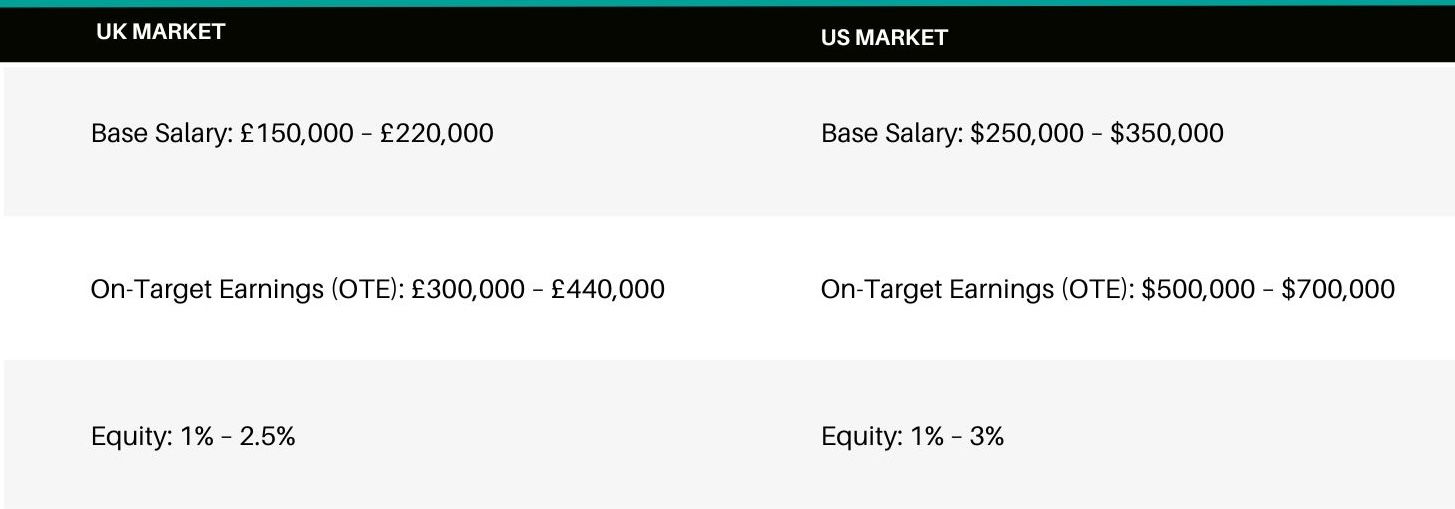
Compensation Benchmarks for a Series B/C CRO
Hiring a top-tier CRO is a significant investment. While compensation packages can vary widely based on location, funding stage, and the candidate’s experience, here are some general benchmarks for Series B and C SaaS companies:
It’s important to remember that these are just benchmarks. The right compensation package will depend on a variety of factors, so it’s always best to consult with a specialist recruitment firm to ensure you’re offering a competitive package that will attract the best talent.
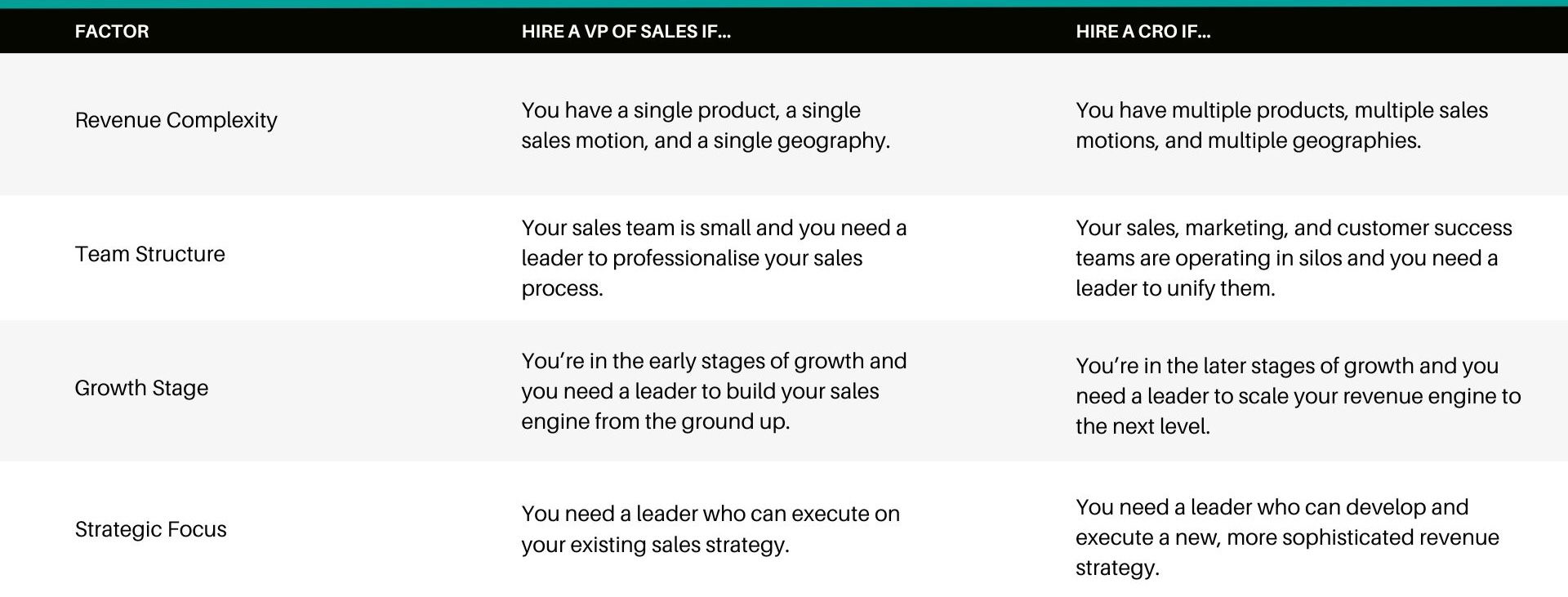
The CRO vs. VP of Sales Decision Framework
To help you decide whether you need a CRO or a VP of Sales, here’s a simple decision framework:
Hire a VP of Sales If….
Board-Level Considerations: What Investors Expect from a CRO Hire
When you hire a CRO, you’re not just hiring a new executive. You’re making a statement to your board and investors that you’re serious about scaling your revenue. Here’s what they’ll expect from your new CRO. For more on this, see our article on board expectations for GTM hiring.
A Predictable Revenue Engine: Your investors want to see a clear and predictable path to revenue growth. Your CRO will be expected to build a revenue engine that is scalable, repeatable, and predictable.
A Data-Driven Approach: Your investors want to see that you’re making data-driven decisions. Your CRO will be expected to use data to inform their strategy and to track their progress against their goals.
A Strategic Mindset: Your investors want to see that you’re thinking strategically about the future of the business. Your CRO will be expected to be a strategic partner to the CEO and the rest of the executive team.
A World-Class Team: Your investors want to see that you’re building a world-class team. Your CRO will be expected to attract, develop, and retain top talent.
When NOT to Hire a CRO
Hiring a CRO is a big step, and it’s not the right move for every company. Here are a few signs that you’re not ready for a CRO:
You’re Too Early: If you’re still in the early stages of product-market fit, you don’t need a CRO. You need a founder who is obsessed with talking to customers and building a product that they love.
You Don’t Have Enough Complexity: If you have a simple business with a single product and a single sales motion, you probably don’t need a CRO. A great VP of Sales can handle the job just fine.
You’re Not Ready to Let Go: If you’re a founder who is used to being involved in every aspect of the business, you may not be ready to hand over the reins to a CRO. You need to be willing to trust your CRO and to give them the autonomy they need to do their job.
Frequently Asked Questions
What is the biggest mistake companies make when hiring a CRO?
The biggest mistake we see is hiring a CRO too early. A CRO is a significant investment, and if you hire one before you’re ready, you’ll likely burn through a lot of cash without seeing the results you’re looking for. Before you hire a CRO, make sure you have a clear and predictable path to revenue growth, and that you’re ready to hand over the reins to a new leader.
How long should it take for a new CRO to make an impact?
A new CRO should be able to make a significant impact within their first 90 days. In the first 30 days, they should focus on learning the business and building relationships with the team. In the first 60 days, they should identify the biggest opportunities for improvement and start to implement some quick wins. And by the end of the first 90 days, they should have a clear plan in place for how they’re going to scale the revenue engine.
Is a CRO just for SaaS companies?
While the CRO role is most common in SaaS companies, it’s becoming increasingly popular in other industries as well. Any company that is looking to scale its revenue and create a more predictable revenue engine can benefit from hiring a CRO.
What are the key traits to look for in a CRO?
When you’re hiring a CRO, you should look for someone who is strategic, data-driven, and a great leader. They should have a proven track record of success in a similar environment, and they should be passionate about building a world-class revenue organisation.
Ready to Discuss Your CRO Strategy?
Hiring a CRO is one of the most important decisions you’ll make as a founder or CEO. If you’re ready to discuss your CRO strategy and explore whether it’s the right time to hire a CRO for your business, we’d love to chat. As a specialist retained executive search firm for SaaS, we have a deep understanding of the GTM leadership landscape. Book a CRO readiness discussion with us today
The right hires don’t just fill roles—they accelerate revenue, strengthen culture, and unlock new markets. Partner with Strong Search to secure the GTM talent your SaaS business needs to grow faster and smarter.