Key takeaways
- An empty seat carrying a £600,000 quota leaves around £11,538 of quota unrealised every week.
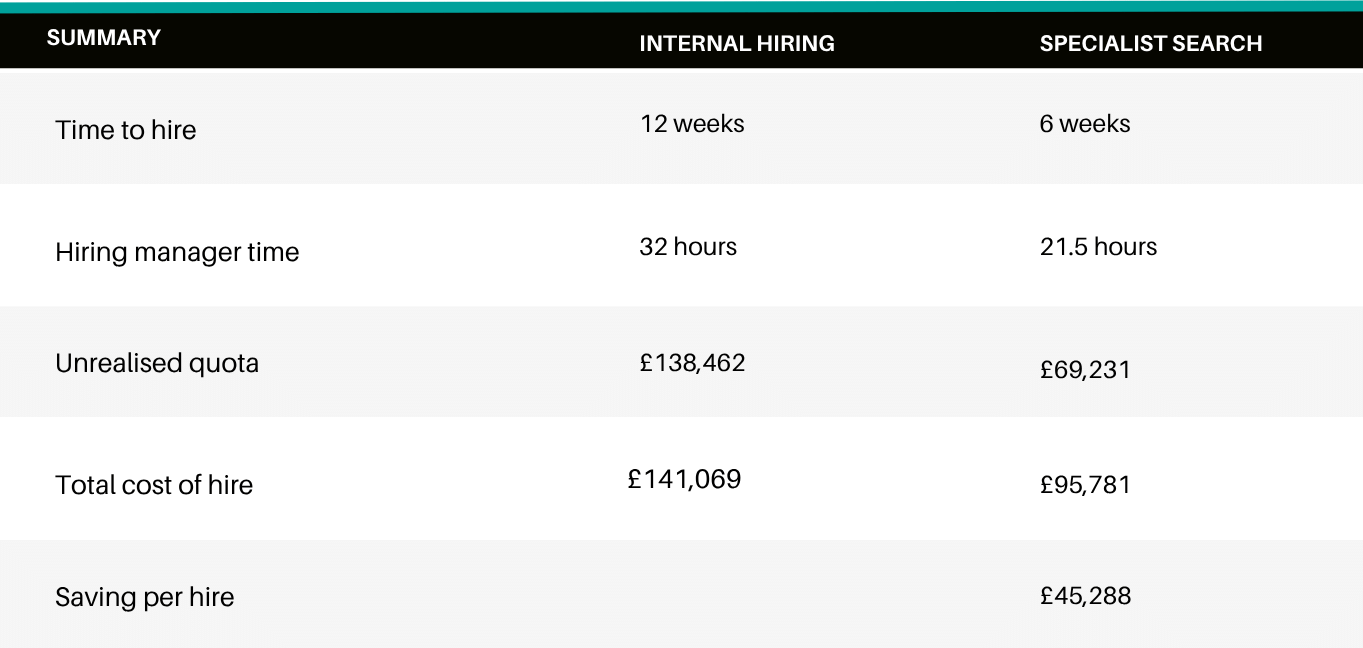
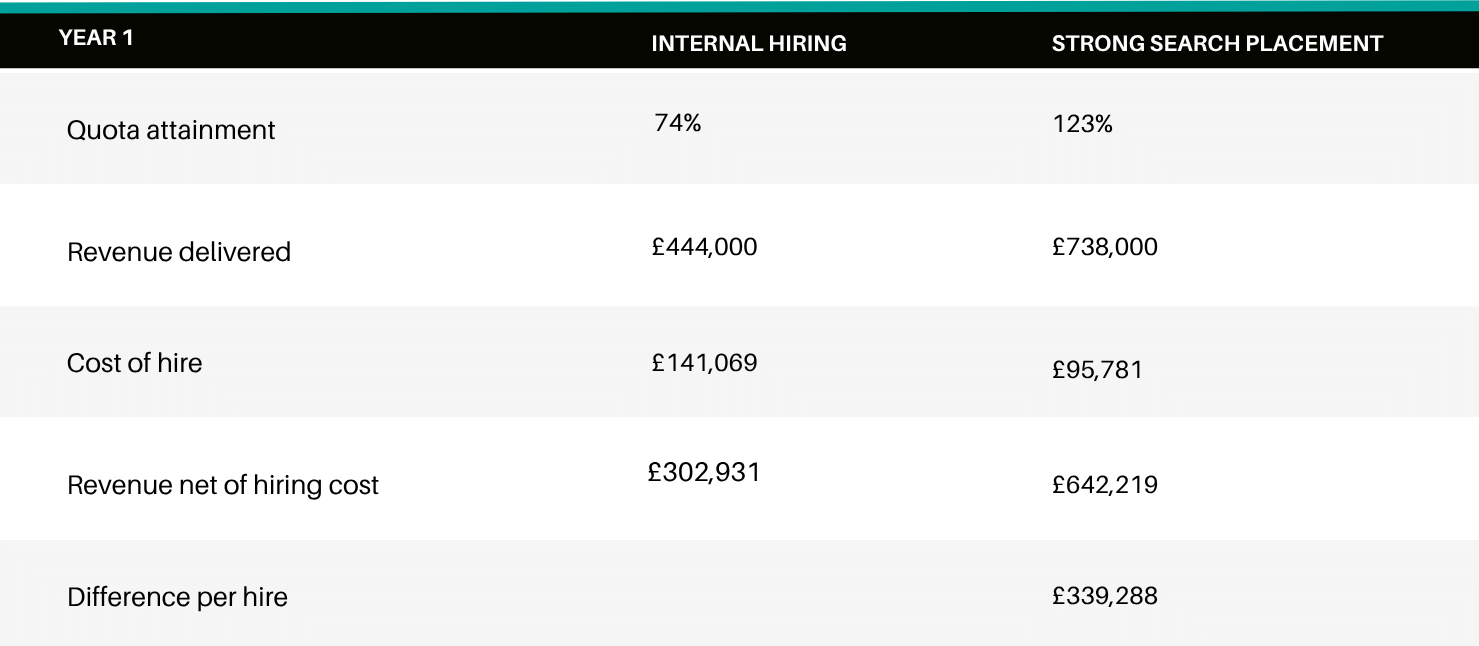
- In our model, hiring internally over 12 weeks costs £141,069 all in. A specialist search over six weeks costs £95,781, including a 25% search fee: a saving of £45,288 per hire.
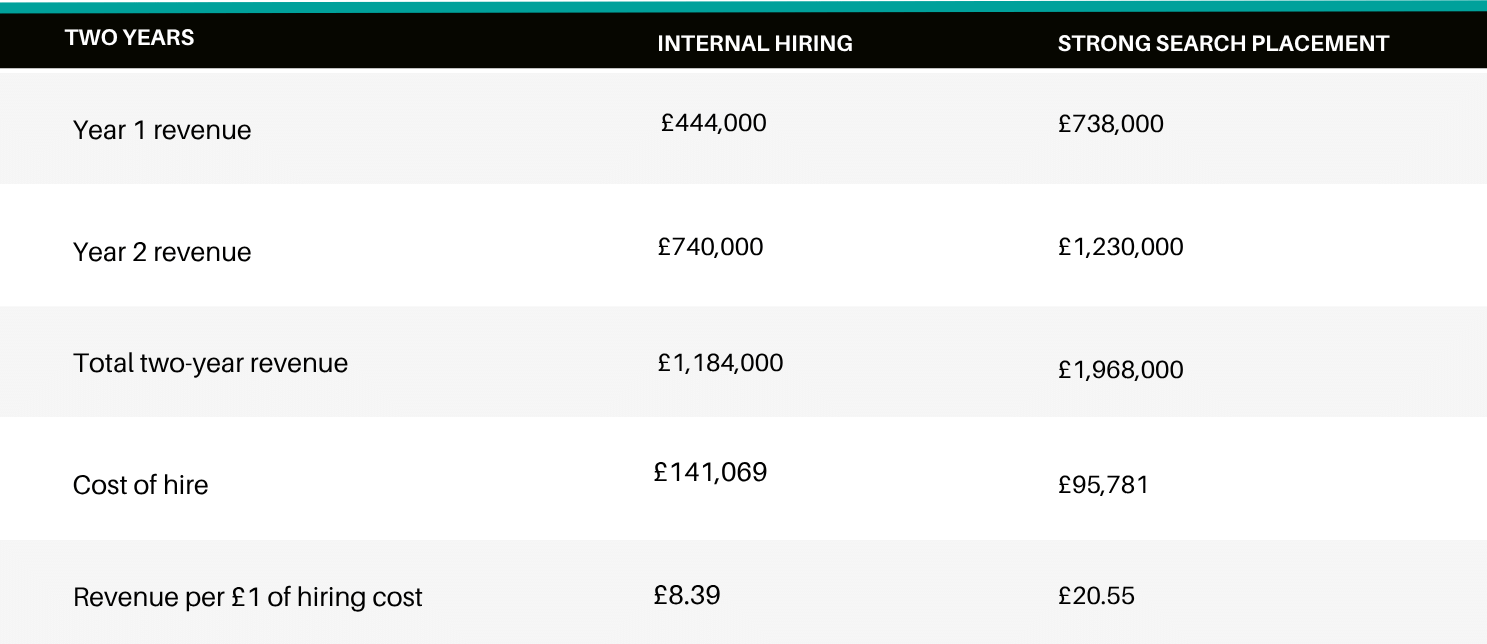
- Quality compounds: at 123% vs 74% quota attainment, the two-year revenue gap is £784,000 per hire.
- The biggest cost in recruitment is rarely the search fee. It is the time the seat sits empty.
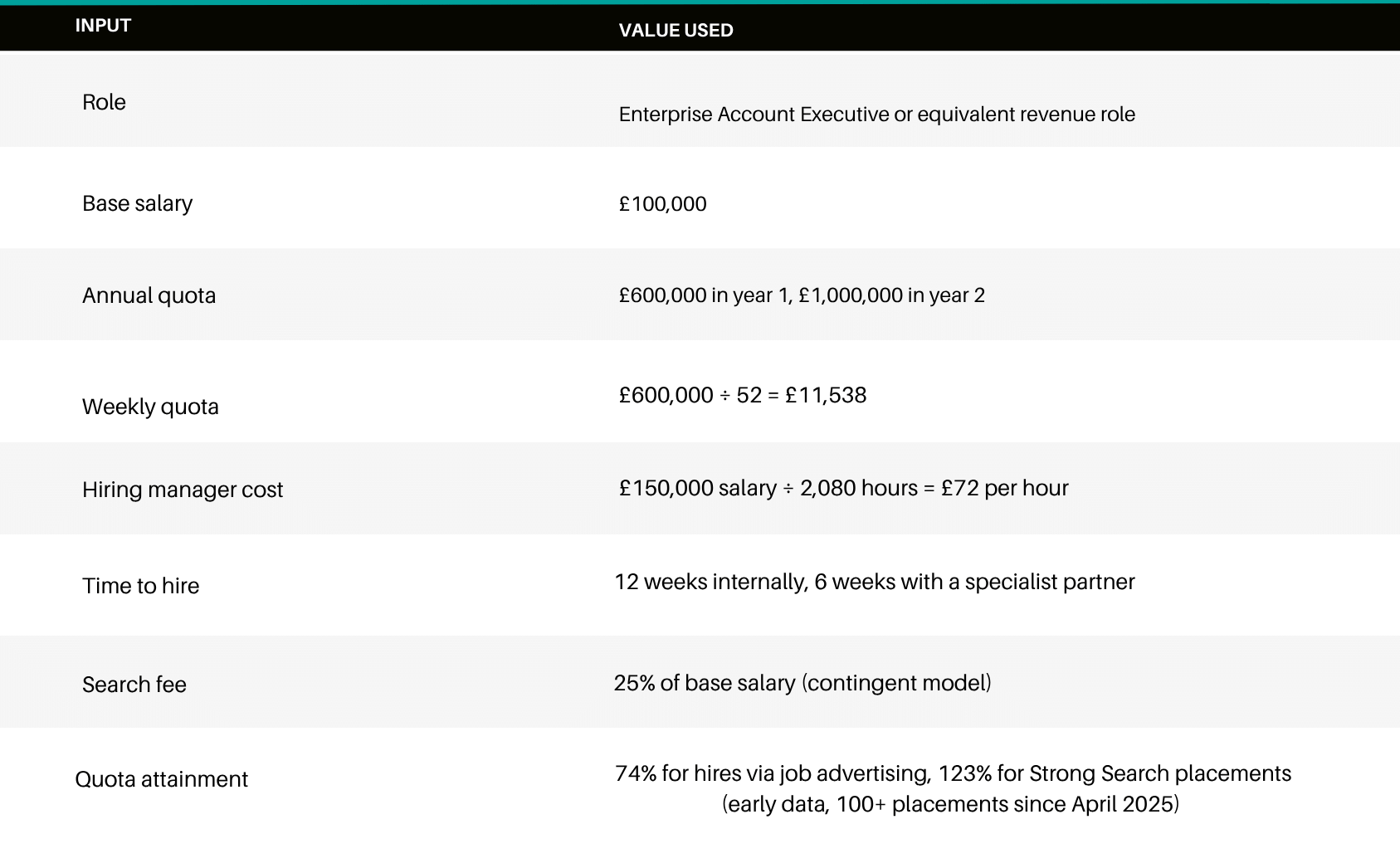
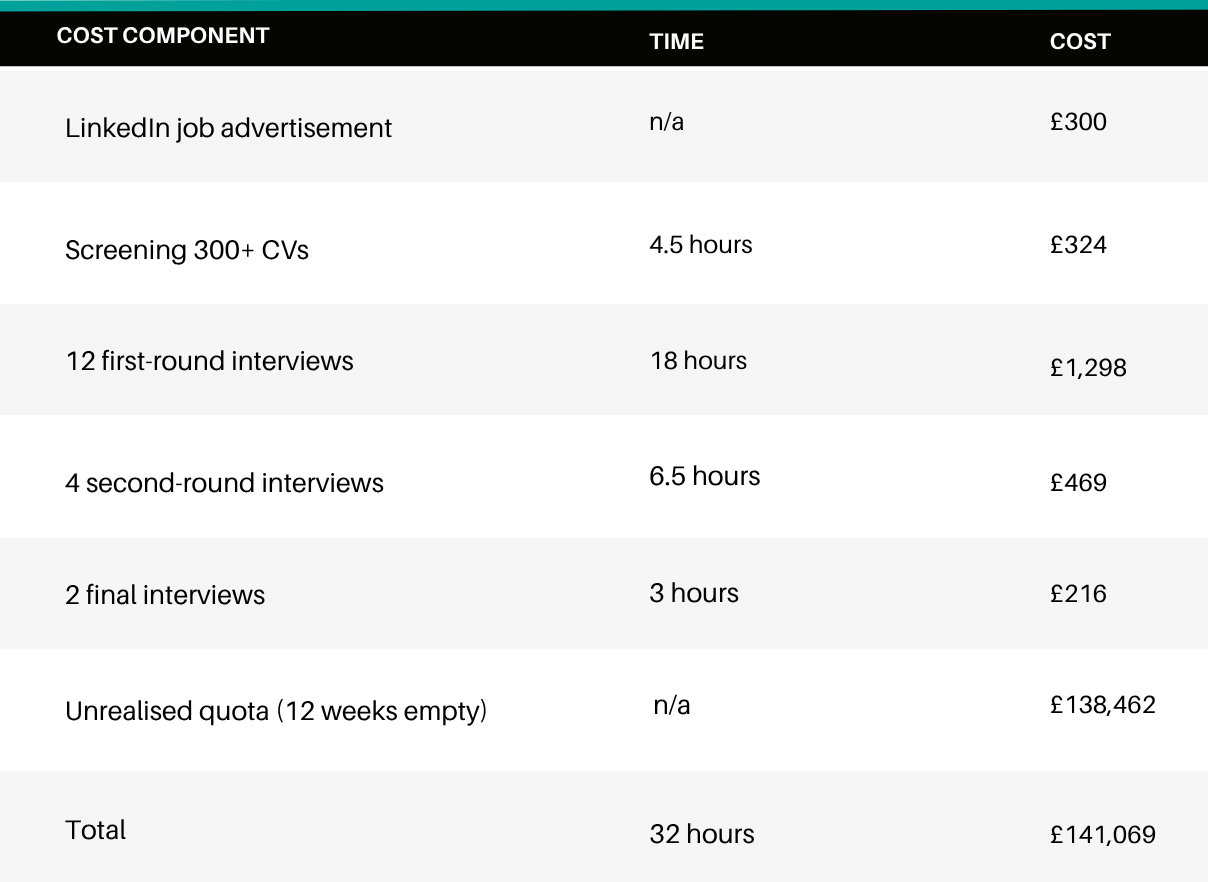
An open headcount in a revenue role costs the quota it would have carried for every week it sits empty, plus the internal time spent filling it. For a £600,000 quota, that is about £11,538 a week, or £138,462 across a typical 12-week internal hire.
Many companies try to save money by recruiting internally and see external search as an avoidable cost. It is an understandable instinct, and often a false economy. We always encourage clients to hire through their own network first. But networks run out of runway, and the cost of an empty seat starts the day they do.
Across 1,500+ GTM hires and 140+ SaaS organisations in our team’s combined careers, the pattern is consistent. Here is the maths.
These are illustrative inputs. Your numbers will differ, which is why the ROI calculator lets you change every one.
When you advertise and run the process yourself, the visible cost looks small: a £300 job post and no search fee. The hidden costs tell a different story.
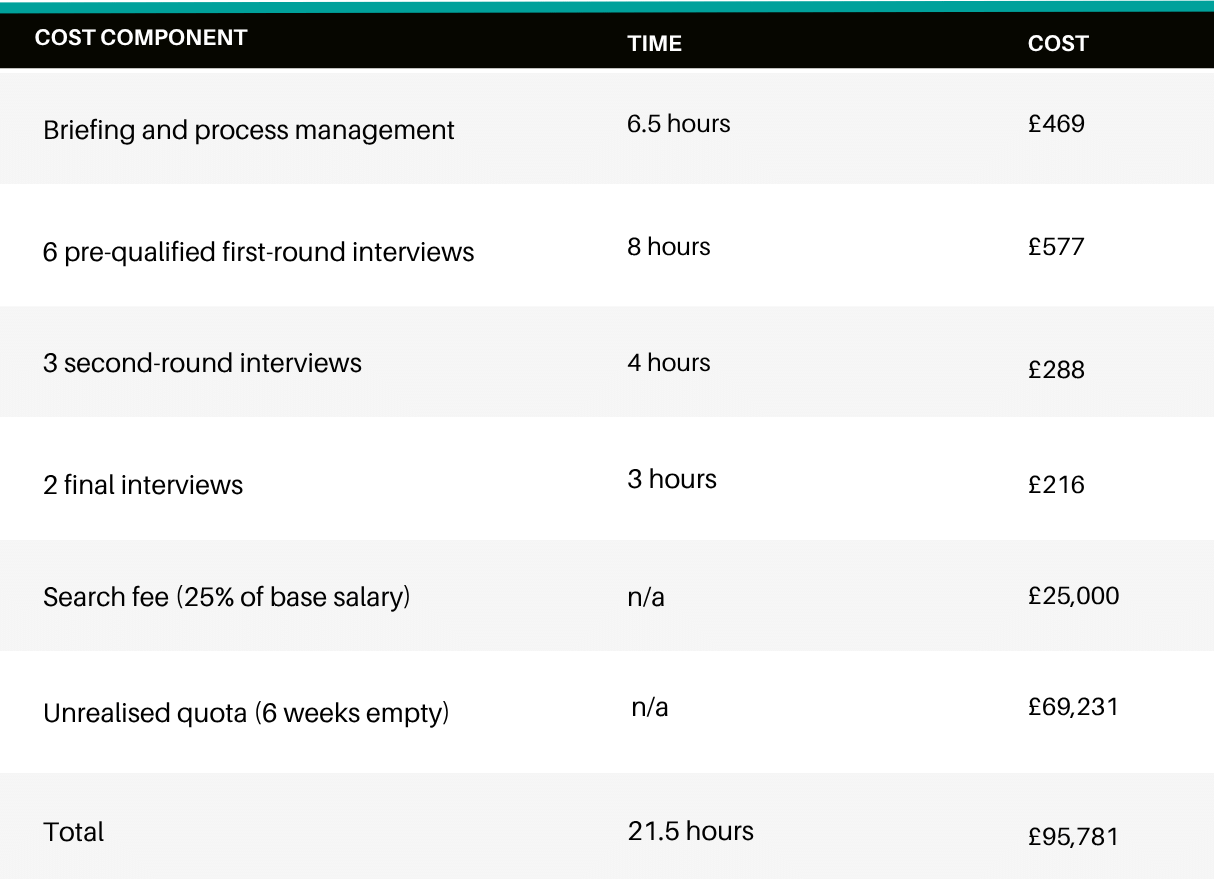
With a specialist partner the search fee is visible, but the total cost changes significantly because the seat is filled in half the time and your team only meets pre-qualified candidates.
Despite a £25,000 search fee, the specialist route costs £45,288 less per hire. The fee is not the expense to avoid. The empty seat is.
Yes, and by more than speed does. Early data from our 100+ placements since launching in April 2025 shows an average quota attainment of 123%, against 74% for hires made through job advertising. Many of those placements are still ramping, so treat this as an early read that we will update as the data matures.
Assuming the year 2 quota rises to £1,000,000:
Two honest caveats. These figures are revenue, not profit, so they show the scale of the difference rather than a return on investment. And the model assumes both hires start on the same day. In practice the specialist hire starts six weeks earlier, so the real gap is larger.
Because unrealised quota can never be recovered, and in enterprise sales the loss compounds. Pipeline not built in month one is a deal that does not close in month seven. Strong Search delivers candidate shortlists in 12 days on average, roughly halving typical hiring timelines, through three things:
- Network access. We maintain relationships with GTM talent across the UK, EMEA, North America and APAC. Many of the best candidates are not actively looking. They respond because they know and trust us
- Rigorous pre-qualification. Every candidate is screened for skills, experience and fit before you meet them, so your hiring managers spend their time on the strongest people
- End-to-end process management. From first outreach to offer negotiation, which keeps momentum and protects your employer brand
The cheapest model is the one that fills the seat with the right person fastest. Strong Search offers all three, and we will recommend the one that fits the hire:
- Retained search for leadership, first-in-region and business-critical roles, where you want a ring-fenced team and committed delivery. We have delivered on 100% of our retained searches
- Contingent search for individual roles where you want specialist reach and pay only on placement
- RPO when you are building or rebuilding a GTM team, hiring several roles across regions, or restructuring after a GTM reorganisation
Compare our hiring solutions
One cost rarely appears in the calculation: reputation. Internal processes under pressure often mean long waits, automated rejections and patchy communication. In a market as interconnected as enterprise software, candidates talk, and a poor experience makes the next hire harder and more expensive.
Strong Search gives every candidate a professional, personal experience regardless of outcome, because we represent your brand in the market as well as our own.
Every business is different. Our free calculator lets you enter your own salary, quota and timeline figures and gives you:
- A complete cost breakdown for internal vs specialist recruitment
- Revenue impact based on quota attainment differences
Calculate your own numbers with our free ROI calculator
A slow hire is expensive. A wrong one is worse. Read The True Cost of a Bad Hire in Enterprise Software and SaaS for what happens when the seat is filled by the wrong person.
The question is not whether you can afford a specialist search partner. It is whether you can afford the empty seat. Talk to Strong Search.
How much does a vacant sales role cost per week?
Divide the role’s annual quota by 52. For a seat carrying a £600,000 quota, every week it sits empty leaves around £11,538 of quota unrealised. Over a typical 12-week internal hire, that is £138,462 before hiring manager time and advertising are added.
How do you calculate the cost of vacancy?
Cost of vacancy = (annual quota ÷ 52) × weeks the role is empty, plus internal hiring time (hours × hourly cost of the people involved) and any advertising or search costs. For non-quota roles, use the revenue or output the role is expected to support.
Is it cheaper to recruit internally or use a specialist recruitment firm?
For revenue-generating roles, usually not. In our model (£100,000 base salary, £600,000 quota), internal hiring over 12 weeks costs £141,069 all in, while a specialist search over six weeks costs £95,781 including a 25% search fee. The saving comes from filling the seat faster.
How long does it take to hire an enterprise Account Executive?
In our experience, internal hiring through job advertising for an enterprise sales role takes around 12 weeks. A specialist search partner can typically halve that, and Strong Search delivers candidate shortlists in 12 days on average.
What is RPO and when should a software company use it?
Recruitment process outsourcing (RPO) means an external partner runs all or part of your hiring process as an extension of your talent team. It suits software companies building or rebuilding a GTM team, hiring several roles across regions, or restructuring after a GTM reorganisation.
Andy Strong is the founder of Strong Search, a UK-based executive search firm that builds go-to-market teams for enterprise software, SaaS and AI companies across the UK, EMEA, North America and APAC. He has two decades of experience in executive search. Connect with Andy on LinkedIn.
Strong Search is a UK-based global GTM executive search firm specialising in enterprise software, SaaS and AI. We build go-to-market teams for PE-backed, VC-backed and founder-led companies across the UK, EMEA, North America and APAC, from individual contributors to CROs, including first-in-region hires and global GTM reorganisations.
We offer retained search, contingent search and RPO. Our team brings 50+ years of combined experience and 1,500+ combined team placements, with 100% placement retention and 100% delivery on every retained search. Strong Search was named Most Trusted SaaS Recruitment Firm 2026 by SME News.